The Annual Wayfinder
The Promise
Close the year measuring what you actually built, not how far you still have to go. The data stays the same; the frame is what sustains forward momentum.
How It Works
- Anchor the starting point at year-open. Document current state across five to eight dimensions your year-theme implies. Date it, write it down, and never revise it.
- Collect and measure at year-end. Gather the four Quarter-Close documents. For each dimension, state the gain as a concrete delta, not a percentage or a score.
- Write the year in gain language and feed it forward. "In January I was X. In December I am Y. The gain is Z." Gains become next year's baseline; unsolved obstacles become the new targets.
In Practice
The typical year-end review measures from the gap: the distance between the year's ambitious targets and where you actually landed. That reading demoralizes no matter how good the year was. The Wayfinder measures from the gain, the distance from where the year began. Same actions, same outcomes, read as evidence of progress rather than failure. It's a year-end tool only; run it mid-year and the starting point loses its meaning.
Original to the Accelerate10x series.
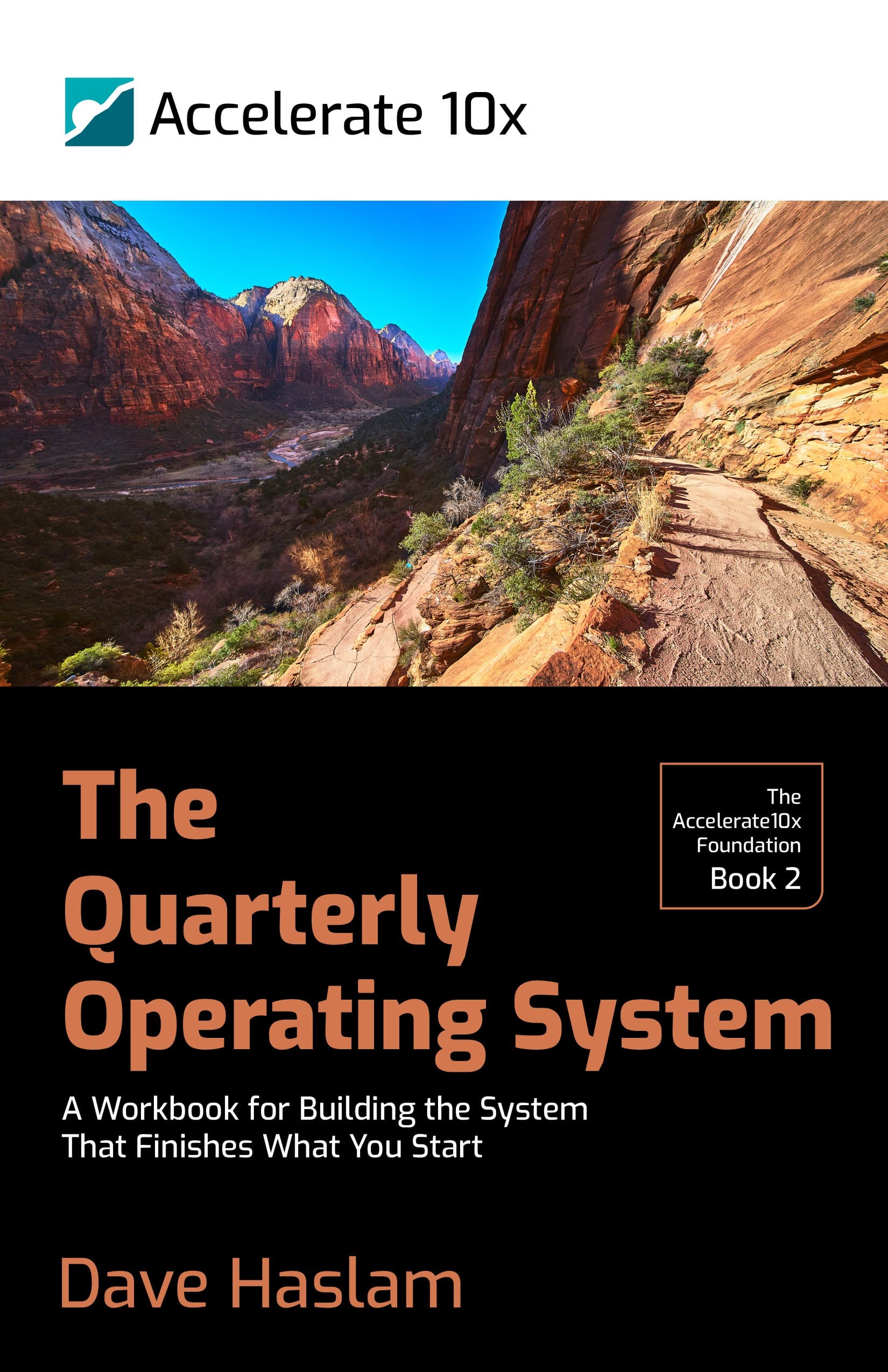
Reading is the easy part
Install it, don’t just read it.
The Annual Wayfinder is walked from principle to practice in The Quarterly Operating System. Get The Achievement Blueprint free, then one framework a week, every Tuesday.
Free. No spam. Unsubscribe anytime.
Keep going
Ch 3 · The Quarterly Operating System
OKRs
Ambitious objective, measurable key results. The goal stops being a talking point.
Primary sources: Andrew S. Grove, High Output Management; John Doerr, Measure What Matters.
Ch 5 · The Identity Install
Reverse Engineering from Outcome
Define the finished state in detail, then walk backward to today's step.
Primary source: Stephen R. Covey, The 7 Habits of Highly Effective People.