The Start-Line Measure
The Promise
Write down where you stand before the work begins, date it, and never revise it. Every review after that measures a change you can prove from a line that doesn't move.
How It Works
- Write the start line before you begin. Five to eight dimensions you choose, one to three sentences each, describing the literal current condition. Date it. Don't revise it.
- State the gain as a measured change. "Revenue: $0 in January, $14,000 in December." Start value first. A percentage of target, not a measured change, is what turns a gain back into a gap.
- Redraw the line at every close. The quarter's end state becomes the next quarter's start line, and four quarters measure the year.
In Practice
Long-horizon goals measured against a moving target feel like failure most of the time: the aspiration expands as the target approaches. The same trajectory, measured from a fixed starting point, reads as evidence of progress. The data is identical; the reference point determines the motivational result.
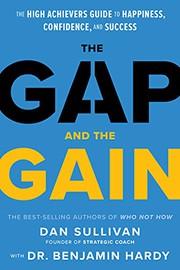
Primary source: Dan Sullivan and Benjamin Hardy, The Gap and the Gain.

Reading is the easy part
Install it, don’t just read it.
The Start-Line Measure is walked from principle to practice in The Identity Install. Get The Achievement Blueprint free, then one framework a week, every Tuesday.
Free. No spam. Unsubscribe anytime.
The journal runs this framework in The Year. See the journal
Keep going
Ch 2 · The Identity Install
Behavior Follows Identity
Claim the identity first; the behavior reorganizes around it.
Primary source: James Clear, Atomic Habits.
Ch 2 · The Momentum Playbook
Commit, Act, Earn
Commit before you feel ready. Confidence arrives as the receipt.
Primary source: Dan Sullivan, The 4 C's Formula.