OKRs
The Promise
Separate where you're going from how you'll know you're getting there. Set ambitious objectives, attach quantitative key results, and the goal stops being a talking point.
How It Works
- Write the Objective in language you'd say out loud. Name where you're trying to end up by quarter's end. Three to five at most, or the focus collapses.
- Attach 3-5 measurable Key Results to each. "Increase revenue" fails. "Increase MRR from $40k to $60k" passes. If you can't tell whether you hit it, it isn't one.
- Review on a fixed cadence and score against the 70% band. Hit 100% every time and the targets were too small. Drop below 30% and something is structurally wrong.
In Practice
Quarterly is the standard cadence, and the scoring conversation is where the framework does its real work. The number is the test: an Objective without Key Results is a slogan, and Key Results without an Objective are a dashboard pointed at nothing. Set the targets ambitious enough that landing around 70% means the plan was honest and the execution was real.
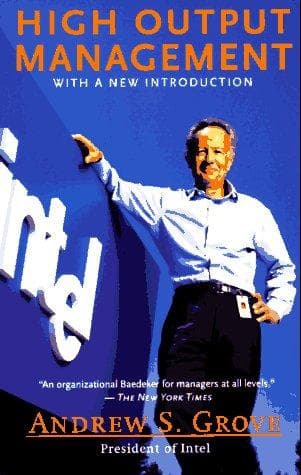
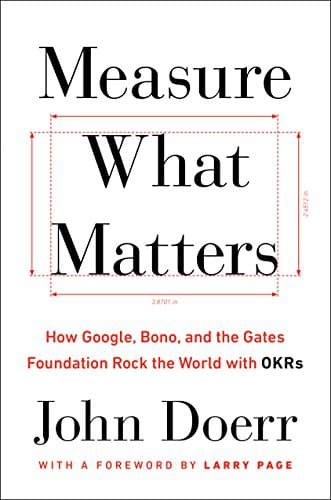
Primary sources: Andrew S. Grove, High Output Management; John Doerr, Measure What Matters.
Reading is the easy part
Install it, don’t just read it.
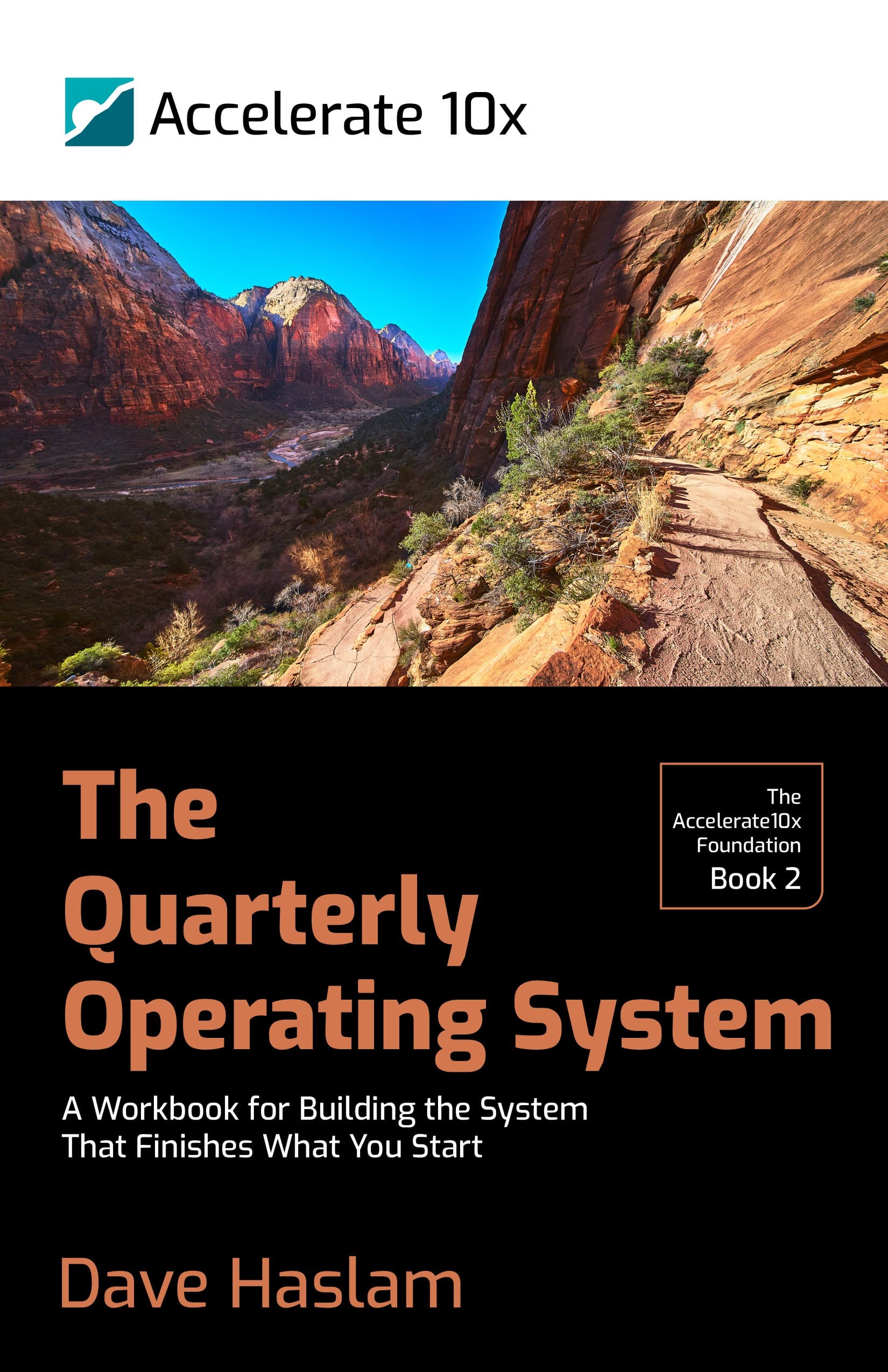
OKRs is walked from principle to practice in The Quarterly Operating System. Get The Achievement Blueprint free, then one framework a week, every Tuesday.
Free. No spam. Unsubscribe anytime.
Keep going
Ch 5 · The Identity Install
Reverse Engineering from Outcome
Define the finished state in detail, then walk backward to today's step.
Primary source: Stephen R. Covey, The 7 Habits of Highly Effective People.
The Identity Install
The 10-Year Horizon
Stretch the horizon to ten years and the size of possible expands.
Primary source: Dan Sullivan and Benjamin P. Hardy, 10x Is Easier Than 2x.