The Thousand-Word Future
The Promise
Write one ordinary Tuesday from your future in enough detail to film, then use it to decide what comes off your calendar. A vision earns its place by what it makes you drop.
How It Works
- Write one Tuesday, a thousand words or more. Present tense, one ordinary day: the rooms, the light at a given hour, the food on the table, the book on the nightstand. A day can be checked against; a list of accomplishments can't.
- Write it at three distances. Ten years first. Then reverse-engineer the five-year midpoint and the three-year version. The three-year version is the one you re-read weekly and edit as it comes true.
- Run your calendar through it. Ask what the person living that Tuesday decided this month, and drop the commitments that fail. The drops are the evidence the vision is working.
In Practice
The most common failure with future visioning is stopping too early: a paragraph where a page would work, an aspiration where a sensory description would do the job. The brain treats a vivid future picture differently from a vague one. The specificity is the mechanism that makes the vision work.
Source book
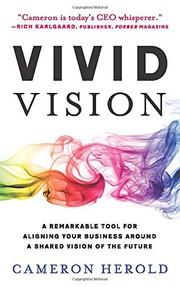
Primary source: Cameron Herold, Vivid Vision.
Reading is the easy part
Install it, don’t just read it.
The Thousand-Word Future is walked from principle to practice in The Identity Install. Get The Achievement Blueprint free, then one framework a week, every Tuesday.
Free. No spam. Unsubscribe anytime.
The journal runs this framework in The Year. See the journal
Keep going
Ch 3 · The Quarterly Operating System
OKRs
Ambitious objective, measurable key results. The goal stops being a talking point.
Primary sources: Andrew S. Grove, High Output Management; John Doerr, Measure What Matters.
Ch 5 · The Identity Install
Reverse Engineering from Outcome
Define the finished state in detail, then walk backward to today's step.
Primary source: Stephen R. Covey, The 7 Habits of Highly Effective People.