Rocks, Gravel and Sand
The Promise
The order in which you place commitments matters as much as which commitments you make. A quarter that fills by default leaves no room for the work that requires deliberate selection.
How It Works
- Identify the quarter's rocks before it begins. The Objectives that must move for the quarter to matter. These are the output of the Priority Cut.
- Name the gravel and sand explicitly. The recurring meetings, administrative commitments, and reactive tasks that will fill available time unless pre-empted.
- Place the rocks first. Schedule the sessions they require before the gravel and sand can claim those slots. Everything else fills in around them.
In Practice
Priorities named mid-quarter arrive to a calendar that is already half-full, and the rocks have nowhere to go. The discipline is not the selection but the sequence. Pre-quarter loading does not guarantee the rocks get executed perfectly; it guarantees they have room to be executed at all.
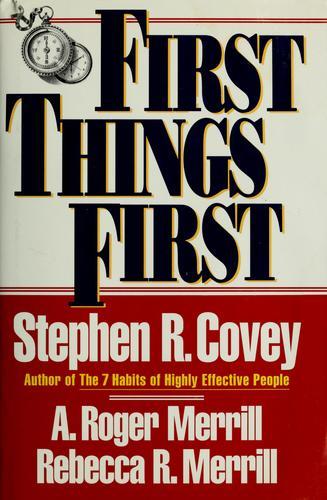
Primary source: Stephen R. Covey, A. Roger Merrill, and Rebecca R. Merrill, First Things First.

Reading is the easy part
Install it, don’t just read it.
Rocks, Gravel and Sand is walked from principle to practice in The Quarterly Operating System. Get The Achievement Blueprint free, then one framework a week, every Tuesday.
Free. No spam. Unsubscribe anytime.
The journal runs this framework in The Weekly Plan. See the journal
Keep going
Ch 5 · The Quarterly Operating System
Ruthless Prioritization
Cut the B+ work so the A work has room to breathe.
Origin unverified; presented here as a practical exercise without attribution.
The Momentum Playbook
The 80-20 Principle
Find the 20% of inputs doing 80% of the work. Double down.
Primary sources: Vilfredo Pareto, the originating observation; Richard Koch, The 80/20 Principle.